
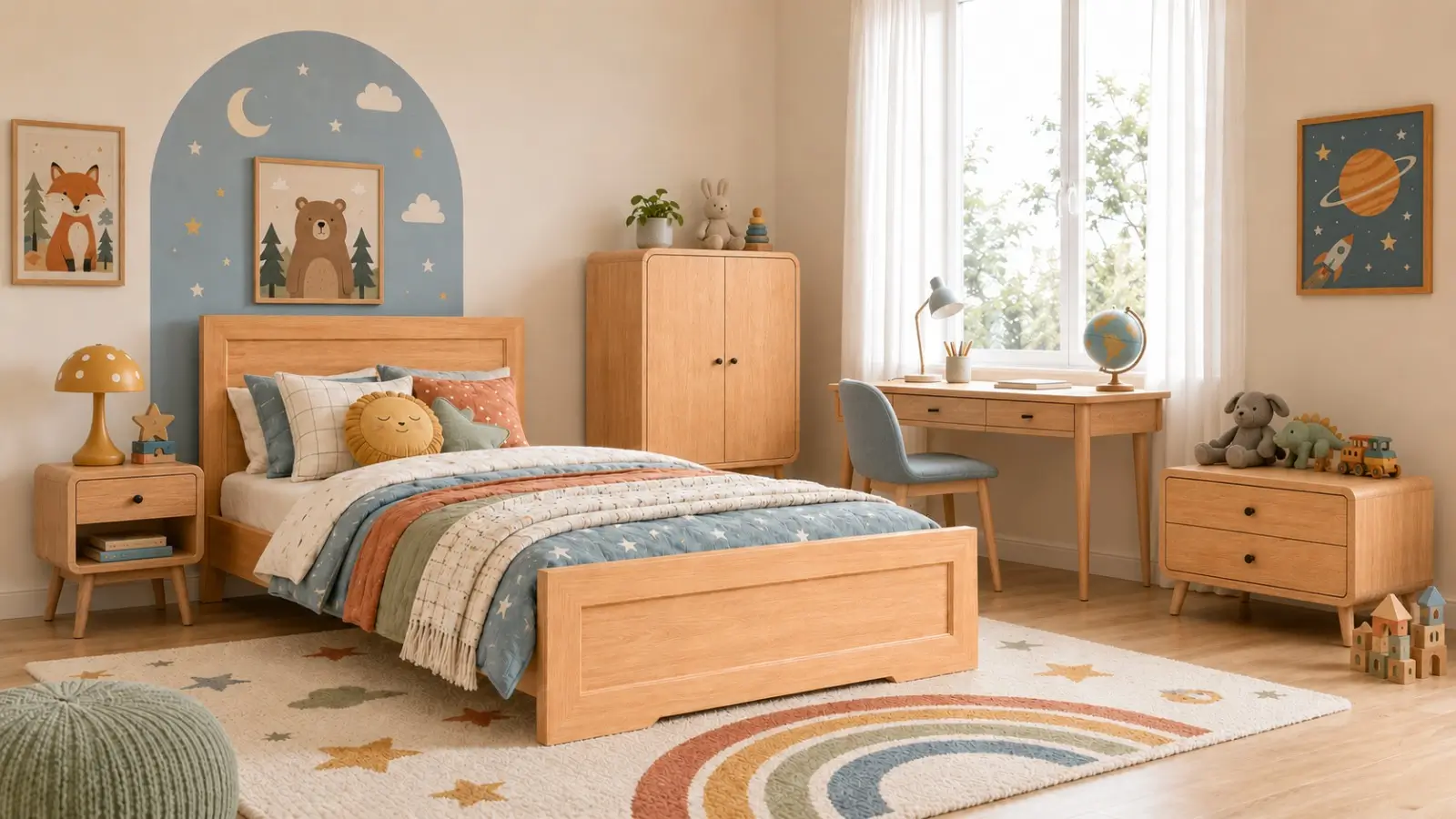
A child's room is far more than a place to sleep. It is a personal environment where imagination develops, routines are formed, homework is completed, and treasured belongings are kept. The best kids' rooms combine comfort and creativity with thoughtful safety, practical storage, and furniture that adapts as children grow.
Whether you are designing a nursery transition, a school-age bedroom, or a shared room for siblings, these ideas will help you create a space that feels joyful, organised, and beautifully considered.
Plan for the child you have today while allowing the room to adapt to the person they are becoming.
Start by considering your child's age, personality, and daily routine. Younger children often need open floor space and low, accessible storage, while school-age children benefit from a comfortable study area, organised book storage, and greater independence.
Think about what the room needs to support today and how those needs may change over the coming years. This approach helps avoid unnecessary furniture replacements and creates a room with lasting value.
Even compact children's bedrooms benefit from clearly defined areas for sleeping, studying, playing, reading, and storage. Furniture placement, rugs, and lighting can naturally separate these spaces without the need for physical partitions.
Keep the sleeping area calm, position the study space where it receives good natural light, and leave an uncluttered central area for movement and play.
The bed should provide proper support, safe access, and enough space for comfortable sleep. A timeless single bed, extendable bed, or carefully selected bunk bed can provide long-term value.
Beds with built-in drawers or lift-up storage are particularly useful in compact rooms. Choose durable designs that can be refreshed with new bedding rather than replaced as your child's tastes evolve.
Safety should be considered from the beginning rather than added afterwards. Secure tall wardrobes and bookcases to the wall, choose rounded furniture edges where possible, and ensure windows, electrical outlets, and cords are safely managed.
Avoid placing heavy objects on high shelves or unsecured artwork directly above the bed. Furniture should remain stable during everyday use and active play.
A calm colour palette helps create a relaxing environment while allowing personality to be introduced through easily changeable accessories. Warm white, soft beige, greige, and natural timber pair beautifully with sage green, dusty blue, blush pink, warm ochre, or muted lavender.
Introduce stronger colours through bedding, cushions, artwork, baskets, and decorative accessories that can be updated as interests change.
A dedicated study space encourages concentration and supports healthy learning habits. Choose a desk with adequate workspace and a chair that promotes good posture.
Position the desk near natural light whenever possible and provide task lighting, organised stationery storage, and space for books, school supplies, and devices.
Children are more likely to stay organised when storage is simple and accessible. Use low shelves, labelled baskets, under-bed drawers, and wardrobe sections that are easy for children to reach.
Combine open storage for everyday toys and books with closed storage for seasonal items and less frequently used belongings.
A dedicated reading corner encourages relaxation and independent reading. Include a comfortable chair or floor cushion, a soft rug, a low bookcase, and warm reading light.
Keep favourite books within easy reach and refresh the selection occasionally to maintain interest.
Children's bedrooms benefit from multiple lighting sources that support play, homework, dressing, reading, and bedtime routines.
Provides comfortable general illumination for everyday activities.
Supports homework, crafts, and focused desk activities.
Provides comfortable lighting for reading before sleep.
Offers gentle reassurance without making the room excessively bright.
Soft furnishings should be comfortable while remaining easy to maintain. Choose washable bedding, durable upholstery, blackout curtains, and low-pile rugs suitable for floor play.
Layer cotton, woven fabrics, and soft textures while avoiding excessive decorative items that collect dust or complicate cleaning.
Children's interests should be reflected in the room, but highly themed furniture can quickly become outdated. Build the room around timeless furniture and introduce favourite themes through bedding, artwork, toys, display shelves, and wall decorations.
Leave room for children's drawings, achievements, and personal collections to make the space feel unique.
Shared bedrooms should give each child a sense of personal space. Wherever possible, provide individual bedside storage, reading lights, display areas, and wardrobe sections.
Bunk beds can save valuable floor space but should always be age-appropriate, structurally secure, and used according to the manufacturer's safety recommendations.
In smaller bedrooms, choose multifunctional furniture and make good use of vertical storage. Storage beds, tall wardrobes, compact desks, and floating shelves provide practical functionality without overcrowding the room.
Maintain a cohesive colour palette, preserve clear walkways, and avoid filling every wall. A few well-proportioned furniture pieces usually create a greater sense of space.
Choose durable furniture with simple shapes and timeless finishes that can transition through different stages of childhood. Adjustable desks, modular storage, and neutral beds allow the room to evolve without requiring complete redesigns.
Refresh the room through paint, textiles, lighting, and decorative accessories rather than replacing major furniture pieces.